THE MANIFESTO
For the Play and Imagination of Being Human
Two other documents come before this one. Who We Are introduces the house. The Hound, the Jackal, and the Fire explains the images that keep turning up in everything here. If you have read them, good. If you have not, nothing here is locked behind them. This is the longer walk, taken by anyone curious enough to keep going. You came, so welcome.
The House
Everything here happens inside one house.
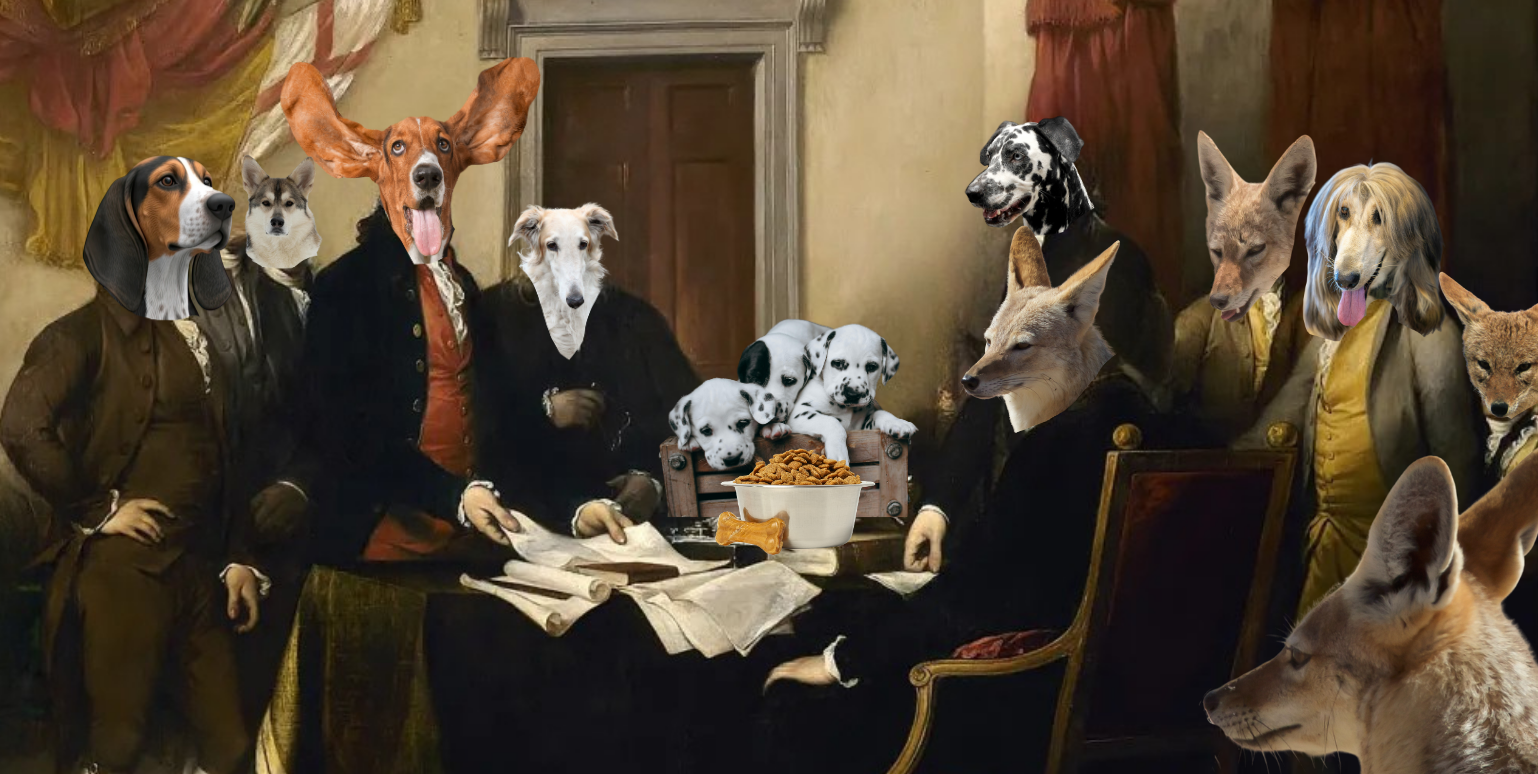
It has no address. It is an illustrator’s desk in Algeria at one in the morning. It is a mixing room in another country. It is four people at a kitchen table with dice and a bowl of something to eat. Wherever the work is being made, and wherever it is being met, that is the house.
The illustrators are in it. So are the composers, the vocalists, the mixing engineers, the cartographers, the layout designers and the video editors. So are the people at the far end who buy the book, put the record on, and play it on an ordinary Tuesday evening.
The fire is in it. So are the hound, the jackal, and the person who walked in. What those four mean is explained in The Hound, the Jackal, and the Fire.
Every project this house makes is a different door into it. A game. An album. A deck of cards. A book of recipes. An hour of theatrical magic. Different doors, same house.
Why Play
Play is not what people do once the serious business is finished. It is one of the ways a person becomes fully human, and it is how most of us learned to be human in the first place.
Watch a child for an afternoon. Nearly everything they will ever have to do gets rehearsed there first. Negotiating. Losing. Pretending to be somebody else for long enough to understand them. Being frightened on purpose, in a place where nothing can actually get you.
Adults do not stop needing that. A game is somewhere to rehearse a life you have not lived. A story is a way to stand next to something terrible and look straight at it, which is far harder to do while it is happening to you.
Play makes the unbearable approachable.
I have watched a person rehearse a hard conversation in a quiet room before going out to have it for real, and I have watched the rehearsal make the difference. That is play doing its oldest job. A game does the same thing with a board and some dice.
That is why this house exists, and it is why the work looks the way it does.
Wonder
The open question outranks the answer.
Mysteries here do not get solved. The horror is not explained in the last chapter. Folklore stays folklore, because a legend that gets conclusively identified stops being a legend and becomes a footnote.
This is deliberate and it costs something. A reader who wants to be told what the thing in the woods really was will not be told. What they get instead is the condition everybody actually lives in, which is a world that does not account for itself.
Awe is the point. Not reassurance, and not optimism. The genuine feeling of standing in front of something you cannot take in all at once.
Places, Not Settings
A setting is scenery. Somewhere for things to happen in front of.
A place has a history that began before you arrived and carries on after you leave. It has staff who hold opinions about each other. It has a regular in the corner with a tab that has been running for decades, which everybody has long since stopped mentioning.
Nobody visits a setting. People visit places. So the work builds places. It takes longer and it is worth it.
Experiences, Not Products
A product is something you own. An experience is something you carry.
That is why the projects refuse to sit still inside one medium. An album turns up with artwork and character cards. A bar that does not exist turns up with its own menu and a book of recipes, so the drinks can actually be made.
Music gives you sound. Art gives you something to look at. Food gives you the rest of it: taste, smell, the heat coming off the pan. Cook from the book while the record plays and the place is in the room with you. A speaker on its own cannot do that.
How the Values Get In
Everything above is a claim. Here is how it is actually built, in two projects made a long way apart.
The first thing this house made was a board game about the Beast of Gévaudan, an eighteenth-century monster hunt drawn from the historical record.
Underneath the history is a trauma model.
The hunters collect Fear. The tokens carry hypervigilance, avoidance, flashbacks and nightmares, and each one penalises every roll a player makes for the rest of the game. Nobody reads a paragraph about how trauma degrades ordinary functioning. They watch their own dice get worse and they feel it happen.
Fear can be picked up in the safe city as easily as out in the woods. That is on purpose. Trauma does not stay politely in the dangerous place where it was acquired.
Sacrifice an ally to save yourself and you take the Vengeance token, which hands your hunter an appetite for revenge that crowds out the guilt. That is survivor’s guilt, written as a rule.
None of it is announced during play. It is a monster hunt and it plays like one. The reasoning sits in a design guide at the back, for anyone who goes looking.
Years later, the same house builds horror that runs across several sessions.
A series asks more of people than a single evening does. Players live with a character across several sessions and the weight accumulates rather than clearing when the table is packed away. So both halves get designed. The descent is built deliberately, and so is the way back up.
Every scenario ends with a landing. People step out of the character, say what stayed with them, and come back to the room as themselves. The debrief is part of the structure rather than something added at the end because it seemed like a sensible precaution.
That work is called the Horror! Campaigns.
Set the two side by side. One is a board game about a monster in the French countryside. The other runs across several sessions. Neither one tells a player what it is doing. Both are built so that the thing they are about happens to the people at the table instead of being explained to them.
That is the method and it is the whole of it. A value that gets announced is a value the audience can decline. A value built into the structure is one they walk through.
There is a plainer reason for working this way. Tell somebody you are going to teach them about trauma and many will decide they would rather not, because the subject frightens people and carries a stigma, and their defences are sensible. Put the same understanding inside a monster hunt and they may come willingly. The monster hunt is not a trick, and it has to be worth playing even if nobody ever notices the rest. But what is underneath it is real, and none of it is hidden to be clever. The design guide sits at the back of the book because anybody who wonders why the game works that way is meant to be able to find out.
Many Hands
The illustrators change. So do the composers, the vocalists, the engineers, the cartographers and the layout designers.
Not because the house cannot hold on to people. Many of them come back, book after book. They change because different works ask to be seen differently, and that took years of making things to see clearly.
A scenario about reconstructing what happened in the past wants an artist who draws like memory and archive. A scenario about reading the evidence of a vanished world wants one who draws like inscription and artefact. A scenario about watching people under pressure and deciding what their behaviour means wants the hand of a courtroom sketch artist, because a courtroom sketch is exactly that act: a person observing other people under pressure and committing an interpretation to paper.
In each case the form the artwork takes is the same act the work asks of the person meeting it.
So the changing of hands is not something the values survive in spite of. It is often the truer fidelity. One locked house look would force every different kind of work to be seen the same way, and they are not the same.
There is a plainer reason as well. A factory absorbs its artists into a brand until no individual hand can be seen. A pack does the opposite. Everybody brought into a project here is brought in to be seen: their hand, their instinct, their name.
What the House Holds To
Everything above is a pillar. What follows are the principles that hold the pillars up. They are the ones that get tested, because keeping them sometimes costs money, or a deadline, or a sale.
The audience is surprised and never cheated. Misled sometimes, on purpose, with their consent. Cheated never.
What is built changes only in the open. A rule, somebody’s fate, the way something turns out: any of it can change, but everybody at the table knows it is changing. Changing it secretly is the one thing that really breaks an experience, because people are still risking something you have quietly decided is not at risk. It usually happens for kind reasons. That does not help.
Intensity is something people move through, never something inflicted on them. So the descent gets designed, the depths get designed, and the way back up gets designed with the same care.
What happens at somebody’s table is theirs. Who plays, how it is run, and what is right for those particular people are decisions this house does not make and should not pretend to. What it can do is send the work out prepared.
So everything carries a mature label by default, even when the material is mild, because it is better to over-warn than to surprise somebody. The kind of difficulty is named rather than the specifics, so a table can prepare without spending the surprise. Nothing goes in to cause distress for its own sake: the hard parts are hard because the thing is about something. Guidance goes out with every scenario. And the house has written craft books on how to run these things with respect, care and trust, because offering experiences like these without an account of how to run them would be indefensible.
The house owes the tools and the honesty. The evening belongs to the people in the room.
Nothing preaches. The work does not arrive with its meaning attached.
And the thing this house is for: people, being human, in company. What they hold in common rather than what sorts them apart. Play, imagination, food, music, fear, laughing, being surprised by something. That is a large enough job for one lifetime, and the house is not short of work.
The Fire It Was Built Around
The story goes like this. It was the dawn of humankind. A clever human made a fire. Curious, some wild ancestors of the dog came by and sat nearby. There was food, and it was shared among everyone in the circle around that fire.
The next night, they gathered again and ate together. The next night, again. And again.
Somewhere in all that time it stopped being about the food. A dog stayed on a night when there was nothing to eat, and considered the people there to be part of its pack. A person kept snacks for their dog friends. Nobody can say which night it changed. Nobody decided anything. It has been going on ever since.
All we know is that dogs have been humans’ best friends since before recorded history.
The fire is still going. The house got built around the fire. There is always room for those who wish to join the pack.
The Firekeeper’s Guide is all of this turned into questions that can be answered no, asked of a finished thing before it is allowed to leave.